
CTEV Treatment in Delhi
CTEV, commonly known as Clubfoot or Congenital Talipes Equinovarus , is a common birth deformity where a baby’s foot is twisted inward or downward. Although the condition can worry parents, the good news is that CTEV treatment is highly effective when started
Best CTEV Treatment in Delhi – Complete Guide for Parents | Dr. Nargesh Agrawal – Child Ortho Care
CTEV, commonly known as Clubfoot or Congenital Talipes Equinovarus, is a common birth deformity where a baby’s foot is twisted inward or downward. Although the condition can worry parents, the good news is that CTEV treatment is highly effective when started early. With proper care by a trained paediatric orthopaedic specialist, children with CTEV grow up to walk, run, and play normally.
If you are looking for CTEV treatment in Delhi, one of the trusted names parents recommend is Dr. Nargesh Agrawal, a paediatric orthopaedic expert at Child Ortho Care, known for his specialized and gentle approach to newborn foot deformities.
This detailed guide explains everything you need to know about CTEV, plaster treatment, bracing, CTEV shoes, and long-term care.
What Is CTEV (Clubfoot)?
CTEV is a congenital (birth) deformity where:
- The foot points downward
- The foot turns inward
- The heel is raised
- The calf muscles may appear smaller
The deformity can affect one foot or both. The condition does not cause pain for newborns, but without timely treatment, it can lead to difficulty walking, shoe-fitting problems, and long-term disability.
Why Early CTEV Treatment Is Important
Starting treatment early, preferably in the first 2–3 weeks of life, ensures:
- Faster correction
- Minimal discomfort
- Better long-term foot function
- No need for major surgery later
- Normal walking and standing during childhood
This is why visiting a specialized paediatric orthopaedic doctor is essential for correct and effective CTEV treatment.
CTEV Treatment in Delhi – The Ponseti Technique
Worldwide, the Ponseti Method is accepted as the best treatment for CTEV. It is safe, effective, and gives long-lasting correction with minimal intervention.
Dr. Nargesh Agrawal at Child Ortho Care follows the Ponseti technique, which includes:
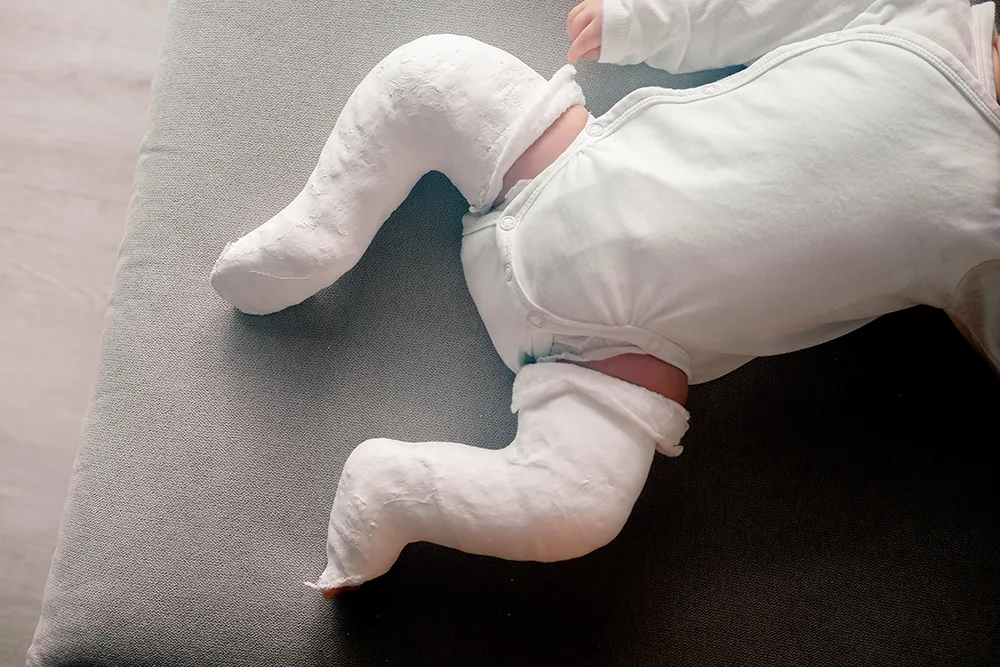
- Weekly Plaster Casting (CTEV Plaster)
This is the first and most important step in treatment.
How CTEV plaster works:
- Soft plaster cast is applied from toes to thigh
- Each cast gently corrects one part of the deformity
- Cast is changed every 5–7 days
- Usually, 5–6 casts are needed
The plaster reshapes the baby’s foot gradually and safely. Parents must keep the plaster clean, dry, and intact.
- Tenotomy (Small Procedure)
After the plaster correction, many babies require a minor procedure called tenotomy, which releases the tight Achilles tendon.
Key points:
- Very small incision
- Minimal discomfort
- Helps the foot achieve final correction
- A final plaster is applied for 2–3 weeks
This procedure ensures long-term success of the treatment.
- Bracing – CTEV Shoes
After plastering, using CTEV shoes (also called clubfoot braces or foot abduction braces) is the most crucial step.
Braces prevent the foot from turning inward again.
Brace schedule:
- First 3 months: 23 hours/day
- After that: Night-time use for 3–4 years
Proper use of CTEV shoes ensures:
- No recurrence
- Maximum correction
- Proper foot shape
- Normal walking pattern
CTEV shoes are mandatory after plastering. Not using them properly is the main reason for recurrence.
Benefits of CTEV Shoes (Clubfoot Braces)
CTEV shoes help:
- Maintain foot correction
- Keep the feet in the right position
- Strengthen ligaments
- Prevent relapse
- Support natural foot growth
The shoes come attached to a bar, which keeps the feet in a corrected and stable angle.
Parents are taught how to:
- Choose the right size
- Fit the shoes correctly
- Adjust the bar width
- Remove and wear the brace safely
Why Choose Dr. Nargesh Agrawal for CTEV Treatment in Delhi?
Parents across Delhi trust Child Ortho Care because of:
✔ Paediatric Orthopaedic Expertise
CTEV is a condition that requires specialized handling.
As a dedicated paediatric orthopaedic doctor, Dr. Nargesh Agrawal understands exactly how to manage newborn feet safely.
✔ Mastery in Ponseti Method
The Ponseti method is globally recommended, and Dr. Agrawal has extensive experience in applying it successfully.
✔ Child-Friendly Plaster Technique
Plasters are applied gently so babies remain comfortable throughout treatment.
✔ Guidance for Parents
Parents receive complete instructions on:
- Plaster care
- Brace fitting
- Selecting CTEV shoes
- Home care and follow-ups
✔ Long-Term Monitoring
Regular check-ups ensure the foot remains corrected as the child grows.
Common Symptoms of CTEV
Parents may notice:
- Foot curved inward
- Foot pointing downward
- Difficulty moving the foot
- Smaller calf on one side
- Abnormal foot arch shape
If you observe any of these signs, early consultation is key.
Causes of CTEV
The exact cause is not always known, but may include:
- Genetic factors
- Abnormal muscle development
- Neuromuscular issues (rare)
Importantly, nothing the parents did during pregnancy causes CTEV. It is a natural condition and fully treatable.
Do All Children With CTEV Need Surgery?
No.
Most children treated with the Ponseti method do not need major surgery.
Surgery is only recommended if:
- Treatment starts late
- The deformity is very rigid
- Braces are not used correctly
- Recurrence happens repeatedly
Even then, the surgery is planned to improve the child’s walking ability and foot function.
How Long Does CTEV Treatment Take?
- Plastering: 4–6 weeks
- Tenotomy (if needed): One day procedure
- Final plaster after tenotomy: 2–3 weeks
- Bracing: Upto 4 years (mostly at night)
Although bracing seems long, it is essential to prevent relapse.
Tips for Parents During CTEV Treatment
- Keep plaster dry at all times
- Never remove plaster at home
- Observe baby’s toes daily
- Ensure CTEV shoes fit perfectly
- Follow brace schedule strictly
- Do not skip follow-up appointments
- Monitor your child’s walking pattern
Consistency is the key to successful treatment.
Conclusion
If your baby has been diagnosed with clubfoot, timely and proper treatment ensures a healthy, active future. For parents searching for CTEV treatment in Delhi or guidance regarding CTEV plaster, CTEV shoes, and long-term bracing, consulting a trained paediatric orthopaedic specialist is essential.
Dr. Nargesh Agrawal at Child Ortho Care provides specialized, gentle, and effective CTEV treatment using the internationally trusted Ponseti method. With advanced techniques, parent-friendly guidance, and dedicated follow-up care, the clinic is a reliable centre for clubfoot/CTEV correction in Delhi.
Book an Appointment with Dr. Nargesh Agrawal
Tell us about your child's condition — the team replies within 24 hours. International patient desk available.
Ready to talk to Dr. Nargesh Agrawal?
Book a consultation. Most appointments confirmed within 24 hours.